
PTLG : Bespoke & Curated Travels!
Ultimate Zambia Safari

A practical guide to building a multi-destination Zambia safari

Why Combine Multiple Destinations in Zambia?

One of the biggest advantages of planning a Zambia safari is that the country’s major wildlife destinations offer genuinely different experiences. South Luangwa is renowned for walking and big-cat viewing, Kafue offers immense wilderness and varied habitats, Lower Zambezi is defined by the Zambezi River, and Livingstone brings the drama of Victoria Falls.
Rather than choosing one destination and trying to fit everything into it, travellers with enough time can build a journey that moves through several landscapes. This creates a safari with contrast: walking on one leg, river activities on another, classic game drives elsewhere and a natural landmark to finish.
Koncept Africa’s Zambia portfolio is well suited to this style of travel because the journey can be tailored around the traveller’s interests, preferred accommodation and available time.

South Luangwa: Start With Wildlife and Walking

South Luangwa is a natural choice for the wildlife-focused part of a Zambia itinerary. The park is known for high game density, leopard sightings and walking safaris, and it offers both day and night game drives.

A three- or four-night stay allows enough time to settle into the rhythm of safari and experience more than one style of activity. Flatdogs Camp, Kafunta River Lodge and Shawa Luangwa Camp can be considered depending on the desired accommodation style.
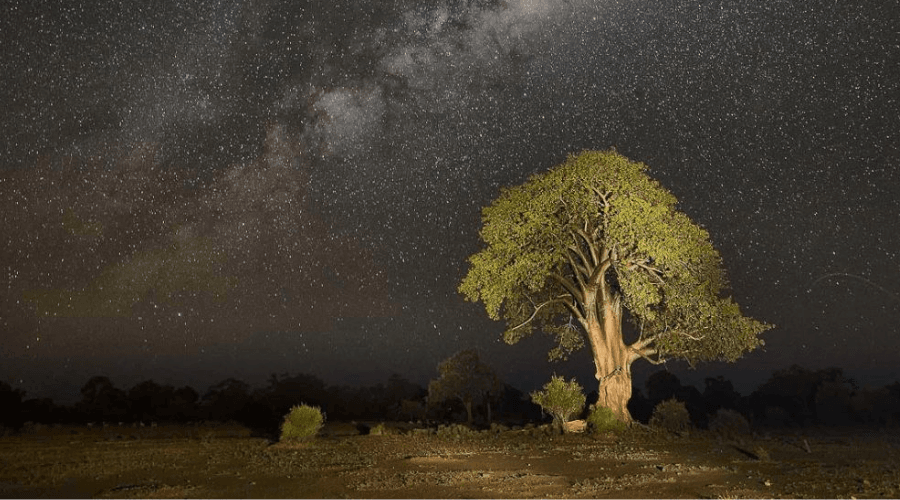
A night safari experience in Zambia
Starting with South Luangwa works well because it immediately immerses travellers in the bush. The itinerary can then shift to a completely different landscape rather than repeating the same experience.

Kafue: Add Space and Wilderness

Kafue National Park brings scale and variety. Its landscapes include woodland, wetlands, rivers and open plains, with the Busanga Plains providing one of its most recognisable safari settings.

Kafue is especially suited to travellers who enjoy exploration. Game drives can be combined with walking, birdwatching, photography, river activities and seasonal experiences. Chisa Busanga Camp, Ila Lodge and Mawambi Lodge provide different ways to experience the park.
Adding Kafue after South Luangwa creates a strong contrast. The focus shifts from the Luangwa ecosystem and walking tradition to a larger, more expansive wilderness where the landscape itself becomes part of the experience.
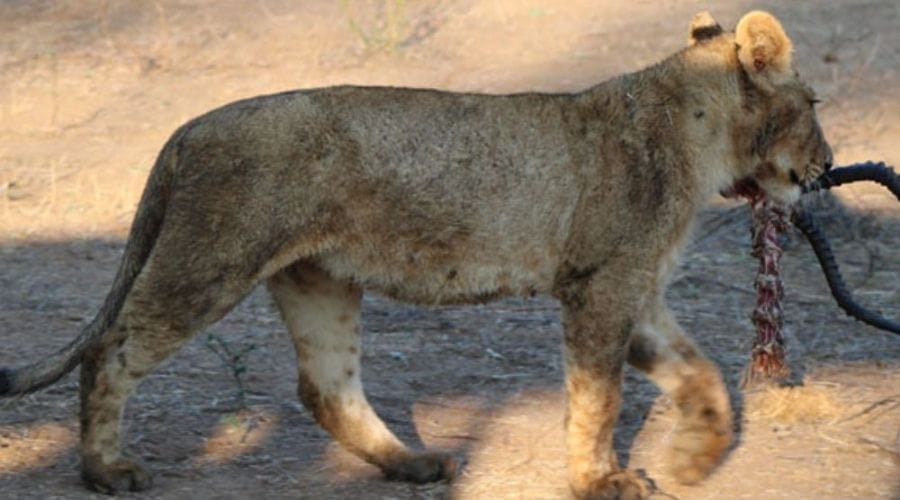
Wildlife viewing on safari in Zambia

Lower Zambezi: Make the River Part of the Safari

Lower Zambezi changes the rhythm again. Here the Zambezi River is central to the safari, with canoeing, boating, fishing and river wildlife complementing game drives and walking.

Baines River Camp, Royal Zambezi, Sausage Tree Camp and Potato Bush Camp can be considered when building the accommodation plan. The choice depends on the desired level of privacy, guiding style and preferred activities.

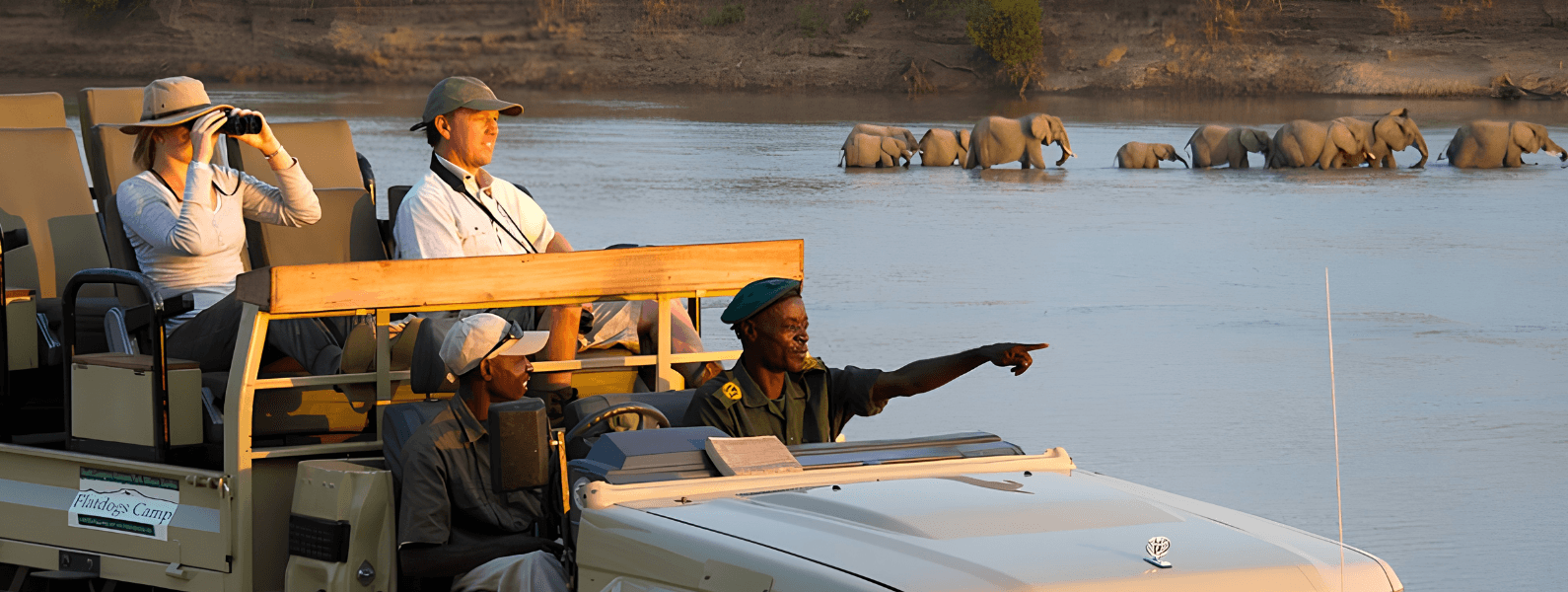
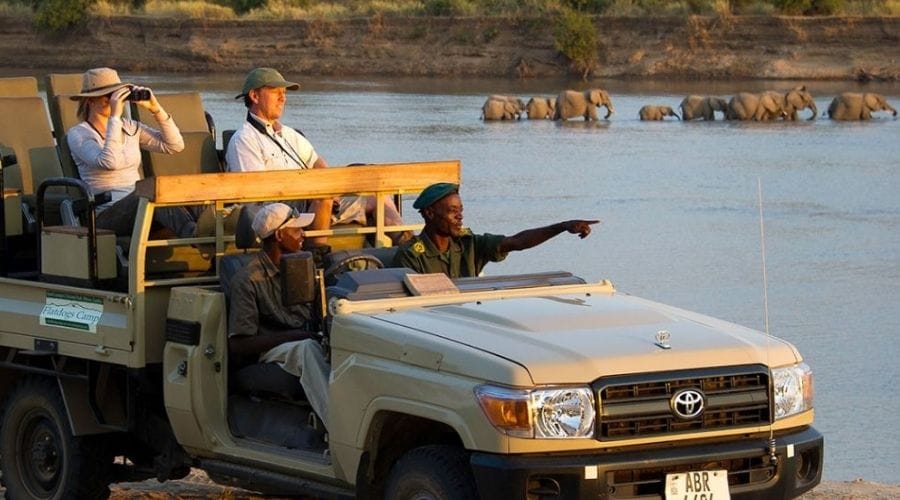
A Lower Zambezi stay works particularly well after a land-focused safari because the river introduces a new perspective. Watching elephants from a canoe or taking a sunset cruise is very different from viewing wildlife from a 4×4.

Livingstone: Finish With Victoria Falls

Livingstone provides a dramatic finale. Victoria Falls adds a completely different kind of natural spectacle, while the Zambezi continues to provide opportunities for boating, fishing, cultural visits and relaxed riverside experiences.
Tongabezi, Sindabezi, Mukwa, Tanyati, Nkhosi Lodge and Siankaba Island are among the accommodation options that can be considered depending on the style of stay. A riverside property can make it easy to combine Falls visits with quieter time on the Zambezi.

Ending in Livingstone can be especially satisfying because the pace naturally changes. After several days of wildlife viewing, travellers can spend time taking in the Falls, enjoying river sunsets and exploring the cultural side of the destination.

How Many Days Do You Need for a Zambia Safari?

A well-rounded Zambia safari can work in around 10 to 14 nights, depending on flight connections and the number of destinations. A simple four-stop structure could be approximately three nights in South Luangwa, three nights in Kafue, three nights in Lower Zambezi and two or three nights in Livingstone.

Travellers with less time can choose two destinations rather than trying to cover everything. South Luangwa plus Livingstone is a strong introduction; Lower Zambezi plus Livingstone works well for travellers who want river experiences; South Luangwa plus Lower Zambezi is ideal for a wildlife-and-water combination.

Longer trips can add more nights to the destinations that best match personal interests. Photographers and serious wildlife enthusiasts may want more time in South Luangwa or Kafue, while travellers prioritising relaxation may prefer longer stays at a riverside camp.

When Is the Best Time for a Zambia Safari?

May to October is generally the preferred period for a classic Zambia safari, particularly for wildlife viewing. Conditions become drier, vegetation thins and animals tend to gather around water.

Victoria Falls has its own seasonal rhythm, so travellers should consider the Falls separately when choosing dates. The experience can be very different at high and low water levels.
The green season can also be rewarding, especially for birding and photography. A tailor-made itinerary can use the season to determine which parks to prioritise rather than treating every destination identically.
Koncept Africa’s role is particularly valuable here because the itinerary can be adjusted around seasonal conditions, camp operating periods, flight schedules and the traveller’s priorities.
Victoria Falls should be considered separately because its water levels follow a different seasonal pattern. This means a traveller planning a multi-stop trip may choose dates based on the combination of experiences rather than one park alone.

Season can influence the order and emphasis of a Zambia safari. The dry season is generally strongest for classic wildlife viewing, while green-season travel can be attractive for birding, photography and lush scenery.

How Much Does Time of Year Matter?

Choose Livingstone if Victoria Falls is the anchor of the trip or if you want to finish a safari with a mix of natural scenery, river experiences, culture and relaxation. Many travellers will find that the best answer is not one destination, but two or more carefully combined.

Choose Lower Zambezi if river experiences are central to your idea of a safari. Canoeing, boating, fishing and wildlife viewing from the Zambezi create a different perspective from a conventional game drive.

Choose South Luangwa if walking safaris, leopard sightings, night drives and high wildlife density are the priority. Choose Kafue if you want scale, varied habitats, Busanga Plains and a more exploratory wilderness feel.

Which Zambia Safari Destination Should You Choose?

The principle is simple: choose fewer destinations and stay long enough to experience them properly. A short safari with two strong destinations often feels richer than an itinerary that changes location every day.
One option is three nights in South Luangwa followed by two or three nights in Lower Zambezi and two nights in Livingstone. Another is Kafue plus Livingstone for travellers who prefer a less conventional wilderness destination alongside Victoria Falls.
Not every traveller has two weeks. An eight-night journey can still create strong contrast by selecting two or three destinations rather than rushing through all four.

A Shorter 8-Night Zambia Safari

The exact number of nights can be adjusted. Travellers who are particularly interested in walking might add time to South Luangwa; those drawn to river adventures might extend Lower Zambezi; and travellers who want a slower finish can give Livingstone an extra night.
South Luangwa can open the journey with wildlife, walking and night drives. Kafue then changes the scale, offering a more expansive wilderness and the landscapes of the Busanga Plains. Lower Zambezi introduces river-based activities, while Livingstone provides Victoria Falls and a softer finale.
A 12-night itinerary can provide a strong introduction to Zambia without trying to see everything. One approach is three nights in South Luangwa, three nights in Kafue, three nights in Lower Zambezi and three nights in Livingstone.

A Sample 12-Night Zambia Safari

Accommodation should follow the same logic. Select camps for their location and experiences, then shape the routing around them. This creates a journey where every stop has a clear reason for being there.
South Luangwa can bring walking and big-cat viewing; Kafue can bring scale and exploration; Lower Zambezi can bring canoeing and river wildlife; Livingstone can bring Victoria Falls, culture and a more relaxed pace.
A good itinerary is built around contrast, not simply distance. If two destinations offer almost identical activities, moving between them may add travel without adding much to the experience. Zambia makes planning easier because its major destinations have such distinct personalities.

What Makes a Good Zambia Safari Itinerary?

Finally, consider the ending. Livingstone is often an excellent finale because Victoria Falls provides a visual and emotional change of pace after several days in the bush.
Build in enough nights for each destination to settle into the experience. Three nights is a useful starting point for many safari stops, while longer stays can be reserved for the places that best match your interests.
Avoid adding a destination simply because it is famous. Every stop should contribute something different to the journey. This keeps the itinerary varied and makes transfers feel worthwhile.

A Few Principles for Getting the Routing Right

Planning around energy as well as geography makes the final journey more comfortable and often more memorable.
A multi-destination itinerary should not feel like a race between airstrips. After an intensive wildlife stay, a riverside camp or Livingstone can provide a natural change of pace.

The Ideal Balance of Safari and Relaxation

A travel designer can also use flight schedules and camp locations to reduce unnecessary backtracking. The result is a smoother journey where more of the holiday is spent experiencing Zambia rather than moving between stops.
Do not feel that every destination needs the same number of nights. The itinerary can be weighted towards the region that best matches your interests, with shorter stays used for destinations that serve as a natural introduction or finale.
Two destinations are often ideal for a shorter holiday. Three create a strong balance between variety and travel time, while four make sense when travellers have around two weeks and want a comprehensive Zambia experience.

How to Choose Between Two, Three or Four Destinations

These differences are exactly why a tailor-made Zambia safari is more useful than a fixed route. The destinations can remain the same while the pace, accommodation and activities change completely.
Families can benefit from a slower itinerary with fewer moves, while photographers may prefer longer stays that allow repeated visits to the same wildlife areas at different times of day.
A wildlife enthusiast may want to give South Luangwa and Kafue more time, while a traveller drawn to river experiences may prioritise Lower Zambezi. Someone travelling for a special occasion may want extra nights in Livingstone or a private riverside camp.

A Zambia Safari Built Around Interests

Frequently Asked Questions About Zambia Safaris

1. How many days do you need for a Zambia safari?

Ten to fourteen nights allows a varied multi-destination journey, while shorter trips can focus on two destinations.

2. What are the best safari destinations in Zambia?

South Luangwa, Kafue, Lower Zambezi and Livingstone are four key destinations, each offering a different experience.

3. Can you combine Victoria Falls with a Zambia safari?

Yes. Livingstone is a natural addition to a safari itinerary and works especially well as an opening or closing destination.

4. Which Zambia safari is best for walking?

South Luangwa is particularly associated with walking safaris and immersive bush experiences.

5. Which Zambia safari is best for river activities?

Lower Zambezi is the standout destination for canoeing, boating, fishing and river-based wildlife viewing.

Build a Tailor-Made Zambia Safari

The best Zambia itinerary is not necessarily the one with the most destinations. It is the one where each stop adds something new. By combining wildlife, walking, wilderness, river adventures and Victoria Falls, travellers can experience several sides of Zambia without making the journey feel rushed.
Koncept Africa can design the routing, accommodation and activities around the traveller’s priorities, from a first-time safari to a longer luxury journey across Zambia.

Jayesh Ashar
www.konceptafrica.com
Pearl Tourism & Leisure Group.
info@ptlg.biz

A practical guide to building a multi-destination Zambia safari

Why Combine Multiple Destinations in Zambia?

One of the biggest advantages of planning a Zambia safari is that the country’s major wildlife destinations offer genuinely different experiences. South Luangwa is renowned for walking and big-cat viewing, Kafue offers immense wilderness and varied habitats, Lower Zambezi is defined by the Zambezi River, and Livingstone brings the drama of Victoria Falls.
Rather than choosing one destination and trying to fit everything into it, travellers with enough time can build a journey that moves through several landscapes. This creates a safari with contrast: walking on one leg, river activities on another, classic game drives elsewhere and a natural landmark to finish.
Koncept Africa’s Zambia portfolio is well suited to this style of travel because the journey can be tailored around the traveller’s interests, preferred accommodation and available time.

South Luangwa: Start With Wildlife and Walking

South Luangwa is a natural choice for the wildlife-focused part of a Zambia itinerary. The park is known for high game density, leopard sightings and walking safaris, and it offers both day and night game drives.

A three- or four-night stay allows enough time to settle into the rhythm of safari and experience more than one style of activity. Flatdogs Camp, Kafunta River Lodge and Shawa Luangwa Camp can be considered depending on the desired accommodation style.

A night safari experience in Zambia
Starting with South Luangwa works well because it immediately immerses travellers in the bush. The itinerary can then shift to a completely different landscape rather than repeating the same experience.

Kafue: Add Space and Wilderness

Kafue National Park brings scale and variety. Its landscapes include woodland, wetlands, rivers and open plains, with the Busanga Plains providing one of its most recognisable safari settings.

Kafue is especially suited to travellers who enjoy exploration. Game drives can be combined with walking, birdwatching, photography, river activities and seasonal experiences. Chisa Busanga Camp, Ila Lodge and Mawambi Lodge provide different ways to experience the park.

Adding Kafue after South Luangwa creates a strong contrast. The focus shifts from the Luangwa ecosystem and walking tradition to a larger, more expansive wilderness where the landscape itself becomes part of the experience.
Wildlife viewing on safari in Zambia

Lower Zambezi: Make the River Part of the Safari

Lower Zambezi changes the rhythm again. Here the Zambezi River is central to the safari, with canoeing, boating, fishing and river wildlife complementing game drives and walking.

Baines River Camp, Royal Zambezi, Sausage Tree Camp and Potato Bush Camp can be considered when building the accommodation plan. The choice depends on the desired level of privacy, guiding style and preferred activities.

A Lower Zambezi stay works particularly well after a land-focused safari because the river introduces a new perspective. Watching elephants from a canoe or taking a sunset cruise is very different from viewing wildlife from a 4×4.

Livingstone: Finish With Victoria Falls

Livingstone provides a dramatic finale. Victoria Falls adds a completely different kind of natural spectacle, while the Zambezi continues to provide opportunities for boating, fishing, cultural visits and relaxed riverside experiences.

Tongabezi, Sindabezi, Mukwa, Tanyati, Nkhosi Lodge and Siankaba Island are among the accommodation options that can be considered depending on the style of stay. A riverside property can make it easy to combine Falls visits with quieter time on the Zambezi.

Ending in Livingstone can be especially satisfying because the pace naturally changes. After several days of wildlife viewing, travellers can spend time taking in the Falls, enjoying river sunsets and exploring the cultural side of the destination.

How Many Days Do You Need for a Zambia Safari?

A well-rounded Zambia safari can work in around 10 to 14 nights, depending on flight connections and the number of destinations. A simple four-stop structure could be approximately three nights in South Luangwa, three nights in Kafue, three nights in Lower Zambezi and two or three nights in Livingstone.

Travellers with less time can choose two destinations rather than trying to cover everything. South Luangwa plus Livingstone is a strong introduction; Lower Zambezi plus Livingstone works well for travellers who want river experiences; South Luangwa plus Lower Zambezi is ideal for a wildlife-and-water combination.

Longer trips can add more nights to the destinations that best match personal interests. Photographers and serious wildlife enthusiasts may want more time in South Luangwa or Kafue, while travellers prioritising relaxation may prefer longer stays at a riverside camp.

When Is the Best Time for a Zambia Safari?

May to October is generally the preferred period for a classic Zambia safari, particularly for wildlife viewing. Conditions become drier, vegetation thins and animals tend to gather around water.

Victoria Falls has its own seasonal rhythm, so travellers should consider the Falls separately when choosing dates. The experience can be very different at high and low water levels.
The green season can also be rewarding, especially for birding and photography. A tailor-made itinerary can use the season to determine which parks to prioritise rather than treating every destination identically.
Koncept Africa’s role is particularly valuable here because the itinerary can be adjusted around seasonal conditions, camp operating periods, flight schedules and the traveller’s priorities.
Victoria Falls should be considered separately because its water levels follow a different seasonal pattern. This means a traveller planning a multi-stop trip may choose dates based on the combination of experiences rather than one park alone.

Season can influence the order and emphasis of a Zambia safari. The dry season is generally strongest for classic wildlife viewing, while green-season travel can be attractive for birding, photography and lush scenery.

How Much Does Time of Year Matter?

Choose Livingstone if Victoria Falls is the anchor of the trip or if you want to finish a safari with a mix of natural scenery, river experiences, culture and relaxation. Many travellers will find that the best answer is not one destination, but two or more carefully combined.

Choose Lower Zambezi if river experiences are central to your idea of a safari. Canoeing, boating, fishing and wildlife viewing from the Zambezi create a different perspective from a conventional game drive.

Choose South Luangwa if walking safaris, leopard sightings, night drives and high wildlife density are the priority. Choose Kafue if you want scale, varied habitats, Busanga Plains and a more exploratory wilderness feel.

Which Zambia Safari Destination Should You Choose?

The principle is simple: choose fewer destinations and stay long enough to experience them properly. A short safari with two strong destinations often feels richer than an itinerary that changes location every day.
One option is three nights in South Luangwa followed by two or three nights in Lower Zambezi and two nights in Livingstone. Another is Kafue plus Livingstone for travellers who prefer a less conventional wilderness destination alongside Victoria Falls.
Not every traveller has two weeks. An eight-night journey can still create strong contrast by selecting two or three destinations rather than rushing through all four.

A Shorter 8-Night Zambia Safari

The exact number of nights can be adjusted. Travellers who are particularly interested in walking might add time to South Luangwa; those drawn to river adventures might extend Lower Zambezi; and travellers who want a slower finish can give Livingstone an extra night.
South Luangwa can open the journey with wildlife, walking and night drives. Kafue then changes the scale, offering a more expansive wilderness and the landscapes of the Busanga Plains. Lower Zambezi introduces river-based activities, while Livingstone provides Victoria Falls and a softer finale.
A 12-night itinerary can provide a strong introduction to Zambia without trying to see everything. One approach is three nights in South Luangwa, three nights in Kafue, three nights in Lower Zambezi and three nights in Livingstone.

A Sample 12-Night Zambia Safari

Accommodation should follow the same logic. Select camps for their location and experiences, then shape the routing around them. This creates a journey where every stop has a clear reason for being there.
South Luangwa can bring walking and big-cat viewing; Kafue can bring scale and exploration; Lower Zambezi can bring canoeing and river wildlife; Livingstone can bring Victoria Falls, culture and a more relaxed pace.
A good itinerary is built around contrast, not simply distance. If two destinations offer almost identical activities, moving between them may add travel without adding much to the experience. Zambia makes planning easier because its major destinations have such distinct personalities.

What Makes a Good Zambia Safari Itinerary?

Finally, consider the ending. Livingstone is often an excellent finale because Victoria Falls provides a visual and emotional change of pace after several days in the bush.
Build in enough nights for each destination to settle into the experience. Three nights is a useful starting point for many safari stops, while longer stays can be reserved for the places that best match your interests.
Avoid adding a destination simply because it is famous. Every stop should contribute something different to the journey. This keeps the itinerary varied and makes transfers feel worthwhile.

A Few Principles for Getting the Routing Right

Planning around energy as well as geography makes the final journey more comfortable and often more memorable.
A multi-destination itinerary should not feel like a race between airstrips. After an intensive wildlife stay, a riverside camp or Livingstone can provide a natural change of pace.

The Ideal Balance of Safari and Relaxation

A travel designer can also use flight schedules and camp locations to reduce unnecessary backtracking. The result is a smoother journey where more of the holiday is spent experiencing Zambia rather than moving between stops.
Do not feel that every destination needs the same number of nights. The itinerary can be weighted towards the region that best matches your interests, with shorter stays used for destinations that serve as a natural introduction or finale.
Two destinations are often ideal for a shorter holiday. Three create a strong balance between variety and travel time, while four make sense when travellers have around two weeks and want a comprehensive Zambia experience.

How to Choose Between Two, Three or Four Destinations

These differences are exactly why a tailor-made Zambia safari is more useful than a fixed route. The destinations can remain the same while the pace, accommodation and activities change completely.
Families can benefit from a slower itinerary with fewer moves, while photographers may prefer longer stays that allow repeated visits to the same wildlife areas at different times of day.
A wildlife enthusiast may want to give South Luangwa and Kafue more time, while a traveller drawn to river experiences may prioritise Lower Zambezi. Someone travelling for a special occasion may want extra nights in Livingstone or a private riverside camp.

A Zambia Safari Built Around Interests

1. Is South Luangwa good for a first safari?

Yes. Its wildlife density, range of activities and well-established safari infrastructure make it suitable for first-time and experienced travellers.

2. What is South Luangwa famous for?

It is particularly known for leopard sightings, high wildlife density, walking safaris and the Luangwa River ecosystem.

3. What animals can you see in South Luangwa?

Expect opportunities to see elephants, lions, leopards, buffalo, hippos, crocodiles, antelope and more than 400 bird species.

4. What are the best things to do in South Luangwa?

Game drives, night drives, walking safaris, birdwatching and photographic safaris are among the most popular experiences.

5. Where should you stay in South Luangwa?

Flatdogs Camp, Kafunta River Lodge and Shawa Luangwa Camp are options to consider when tailoring a South Luangwa safari.

Plan Your South Luangwa Safari

South Luangwa works best when the itinerary is built around the traveller rather than around a fixed checklist. Whether the goal is exceptional wildlife viewing, a first walking safari, photography, birding or a slower luxury escape, the right combination of camp, season and activities can transform the experience.

Koncept Africa can tailor a South Luangwa safari and combine it with other Zambian destinations to create a journey with the right balance of wildlife, wilderness, comfort and time.

Jayesh Ashar
www.konceptafrica.com
Pearl Tourism & Leisure Group.
info@ptlg.biz

Leave a Reply


Inquiry