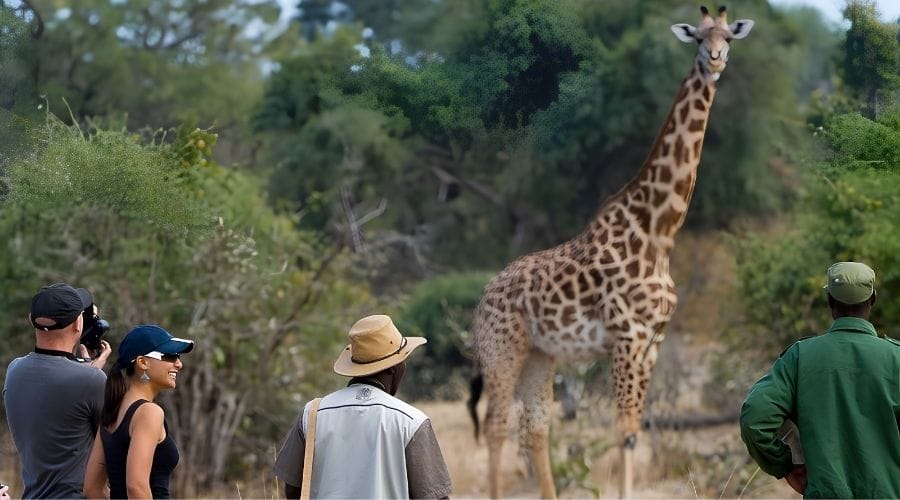
A walking safari is a way of exploring the African bush on foot with an experienced guide, focusing not only on large animals but also on tracks, plants, birds, insects and the subtle signs that reveal what is happening around you.
Unlike a vehicle safari, walking changes the scale of the experience. You move more slowly and become more aware of sounds, scents, footprints and changes in the landscape. The objective is not to approach wildlife closely, but to understand the environment and observe it responsibly from a safe distance.
Zambia is particularly associated with walking safaris. Its wilderness areas and guiding traditions have helped establish the country as one of the leading destinations for travellers who want a more immersive safari experience.
South Luangwa is especially well known for its walking tradition, while Kafue and Lower Zambezi can also offer walking experiences depending on the area, lodge and conditions.
Walking also complements game drives rather than replacing them. A vehicle allows you to cover greater distances and search for larger wildlife, while a walk slows the experience down and reveals a different layer of the ecosystem.
A walking experience here can focus on animal tracks, spoor, vegetation, birds and the relationship between the Luangwa River and wildlife. The aim is to develop an understanding of the bush rather than simply collect sightings.
Kafue offers a different walking environment because of its enormous scale and varied landscapes. Wetlands, woodland and open plains create opportunities to interpret a much broader ecosystem.
Walking in Kafue can be particularly rewarding for travellers who are interested in the smaller side of safari. A guide can explain tracks, plants, bird calls and the behaviour of animals that may not be the main focus of a vehicle-based game drive.
Walking can be paired with canoeing, boating and game drives, making the destination particularly appealing to travellers who want variety. It is also an opportunity to slow down after a more vehicle-focused safari.
Because walking conditions and age requirements can vary by camp, activities should always be confirmed with the lodge when planning the itinerary.
A walking safari is usually conducted with an experienced walking guide and, where required, an armed wildlife escort. Safety and animal behaviour determine the route and pace.
Walks are generally focused on observation rather than distance. You may spend time examining tracks, identifying a plant, watching birds or discussing how animals use a particular habitat. The experience can be physically moderate, but terrain, heat and walking duration vary.
The best approach is to arrive with curiosity rather than expectations of constant big-game sightings. The reward is often the knowledge gained and the feeling of being part of the landscape.
Walking safaris suit travellers who enjoy nature, photography, birding, interpretation and slower travel. They are especially attractive to repeat safari-goers who want to experience a familiar ecosystem differently.
They can also be excellent for first-time visitors who want to understand what makes an African wilderness work. However, the experience should be matched to age, mobility, fitness and comfort, with the lodge consulted about suitability before booking.
The dry season is generally preferred for walking because conditions are more predictable and wildlife viewing can be strong. Cooler early mornings also make walking more comfortable.
Green-season walking can be beautiful, with lush vegetation, birds and dramatic landscapes, but conditions can be wetter and routes may vary. The best time depends on the destination and the traveller’s priorities.
This combination allows travellers to experience the wilderness at several speeds. The vehicle covers distance, the walk reveals detail and the lodge provides the space to rest and reflect.
Walking does not mean giving up comfort. Many luxury camps offer walking alongside refined accommodation, excellent meals and traditional game drives.
Most importantly, expectations should be flexible. Walking is about immersion and interpretation, so the experience can be rewarding even when the biggest wildlife sightings happen from the vehicle later in the day.
Travellers should also be prepared for changing terrain and temperatures. Walking distances vary, and the guide will determine the route based on conditions, wildlife activity and the group’s comfort.
Comfortable, lightweight clothing, sturdy closed footwear, sun protection and binoculars are practical basics for a walking safari. Neutral colours are generally useful in the bush, while a light layer can be valuable for cooler mornings.
This is why guide quality matters so much. A good walking safari is not simply a transfer from a vehicle to a pair of walking shoes; it is an interpretive experience built around knowledge and responsible wildlife viewing.
Guides also interpret the environment. A walk might become a lesson in local plants, geology, insects, bird calls or the relationship between the river and surrounding habitats.
Experienced walking guides read the landscape constantly. Tracks, droppings, feeding marks, broken vegetation and bird behaviour can all help build a picture of what is nearby.
The result is a more educational safari. You may return from a walk without a dramatic predator sighting and still feel that you have understood the landscape in a way a vehicle could not provide.
This slower way of travelling encourages travellers to notice relationships rather than isolated animals. A guide might explain how a plant is used, why a herd chooses a particular area or how water changes the movement of wildlife.
On foot, the bush becomes a series of clues. A line of tracks can reveal where an animal moved earlier in the morning. Broken branches can indicate recent movement, while a change in bird calls can suggest that something larger is nearby.
For travellers interested in conservation and responsible tourism, walking can therefore be one of the most meaningful ways to experience Zambia. It connects the practical realities of wildlife management with the everyday details of the ecosystem.
The experience also encourages a lighter footprint. Instead of covering large distances by vehicle, guests move quietly through a smaller area and learn to observe without disturbing the environment.
Walking creates a particularly direct relationship with the environment, which makes responsible guiding essential. Routes are chosen according to wildlife behaviour, weather, terrain and the ability of the group, rather than simply following a fixed path.
Above all, choose experienced guides and allow the conditions of the day to determine the route. A good walking safari is flexible, safe and driven by the landscape rather than a fixed distance.
South Luangwa is the natural first choice for a walking-focused trip, while Kafue and Lower Zambezi can provide useful variety when combined with other safari activities.
Not all walking experiences are identical. Some are shorter interpretive nature walks, while others are longer bush walks focused on tracks, habitat and wildlife. Ask what the camp offers before choosing the itinerary.
Those details often stay with travellers long after the larger wildlife sightings have become a blur of photographs.
Walking reveals the parts of safari that are easy to overlook from a vehicle: a bird call, a track, a plant, a beetle or the way the wind moves through the grass.
That mindset is part of what makes walking so rewarding. You are not trying to control the bush; you are learning how to read it and move through it responsibly.
Walking is built around respect for wildlife and the environment. Guests follow the guide’s instructions, maintain appropriate distances and allow the animals to determine how an encounter unfolds.
South Luangwa remains the strongest starting point, but adding walking to Kafue or Lower Zambezi can create useful contrast within a longer safari.
That combination appeals to travellers who want adventure without sacrificing comfort. It also makes walking a natural part of a luxury Zambia itinerary rather than a separate type of travel.
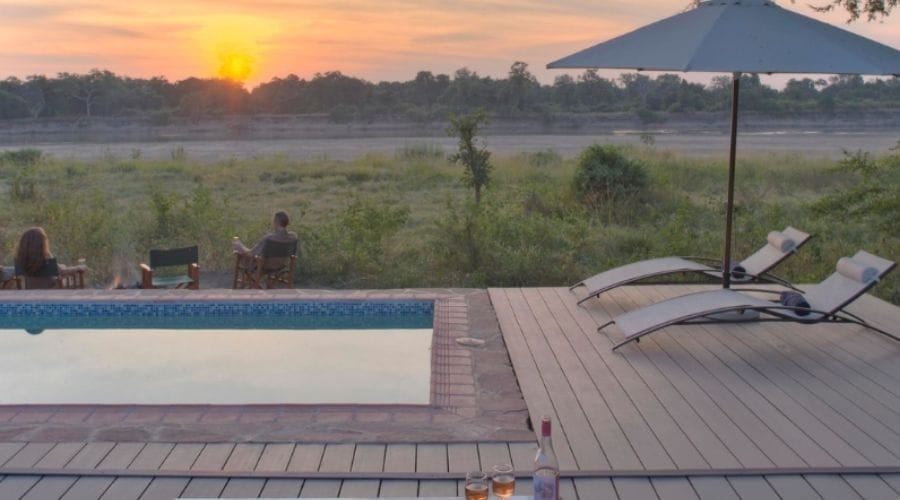
Luxury walking is not about adding more amenities to the bush; it is about having the time, guidance and privacy to experience the landscape properly. A good camp can pair an immersive walk with excellent food, comfortable accommodation and quiet spaces overlooking the wilderness.
Keeping the itinerary flexible also allows the guide to choose the best conditions each day, which is an important part of a safe and enjoyable walking experience.
If walking is the main reason for choosing Zambia, South Luangwa should receive the largest share of the itinerary. Add Kafue or Lower Zambezi when you want to compare different landscapes rather than simply add more walking days.
Walking is not simply an alternative to a game drive; it is a different way of understanding the same wilderness. South Luangwa offers the strongest starting point, while Kafue and Lower Zambezi can add further variety.